Surviving Mediterranean Summer in a beautiful garden
The mediterranean summer is here! The term “dry garden” seems like an oxymoron. It conjures up images of a dusty area surrounding a home, punctuated by a few harsh cacti jutting up from the dirt—with maybe a few rocks to add interest. Sounds pretty dismal, right?
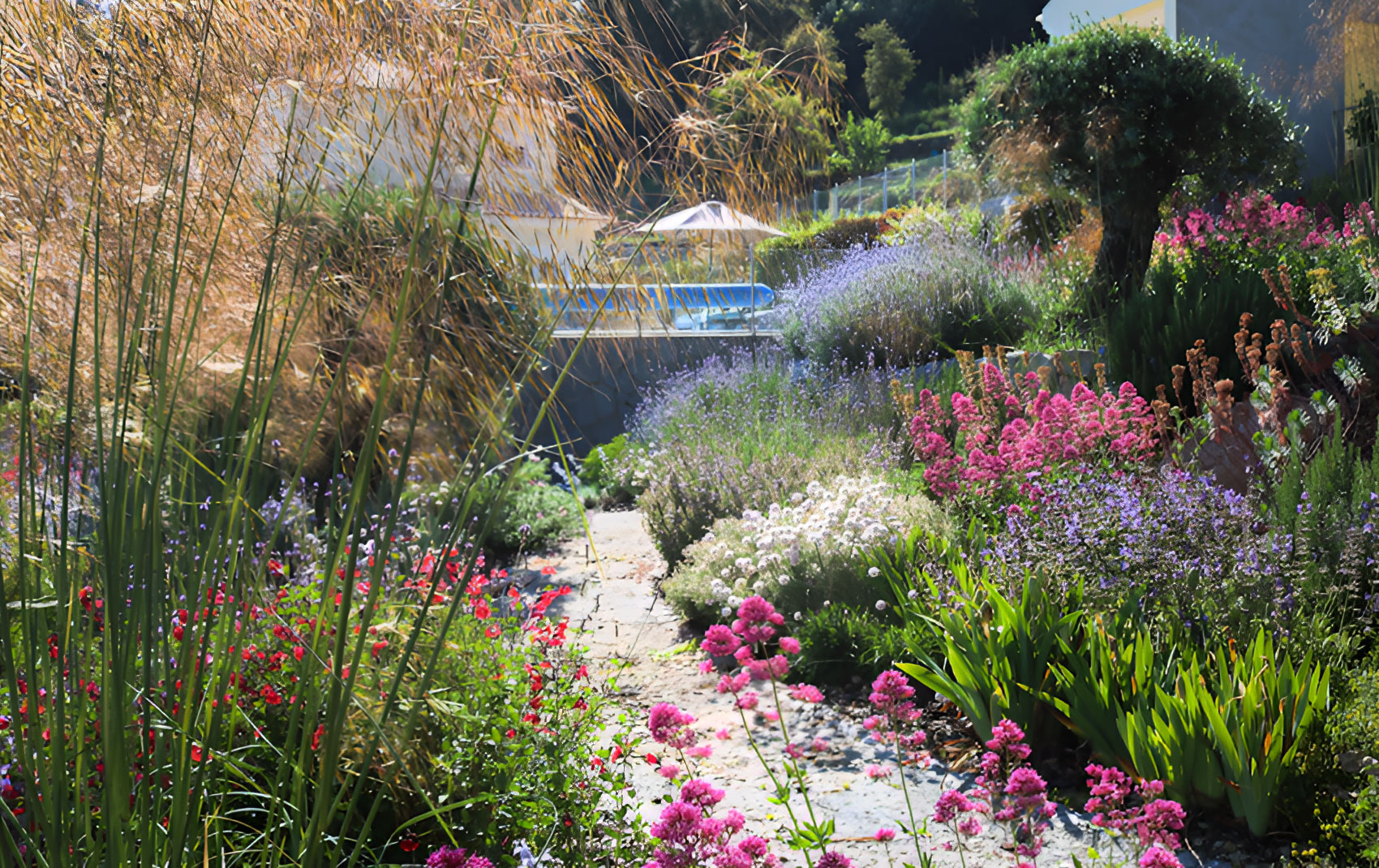
The longest day of the year arrives in just a few days, and the hottest weather is yet to come. Does blazing heat and chalky, rocky soil doom any chance of a beautiful garden? As it turns out, the mediterranean climate offers extraordinary possibilities for a lovely landscape, low water use and the ability for the gardener to rest in the shade when it’s too hot to work.
I always wanted an English cottage garden with roses and clematis tumbling over a picket fence. Unfortunately, I’ve never lived in a place with mild summers, cool winters and regular rainfall. The dream of a Northern European garden is impossible to achieve in our mediterranean climate, defined by mild, wet winters and hot, dry summers with virtually non-existent rainfall. So I’ve taken the approach to “bloom where you’re planted,” as the saying goes. The results can be gorgeous, and so much less work once the plants are established.
Some of the plants adapted to the mediterranean climate go dormant in summer, disappearing below the ground or dropping their leaves. Some plants have leaves with a waxy coating, or the leaves may fold upward in heat, wrapping around themselves and revealing their silvery undersides. Algarve plants such as the azinheira tree (Holm oak) and medronheiro (strawberry bush) are supremely adapted for heat and drought.
So, how to proceed with this new way of making a garden?
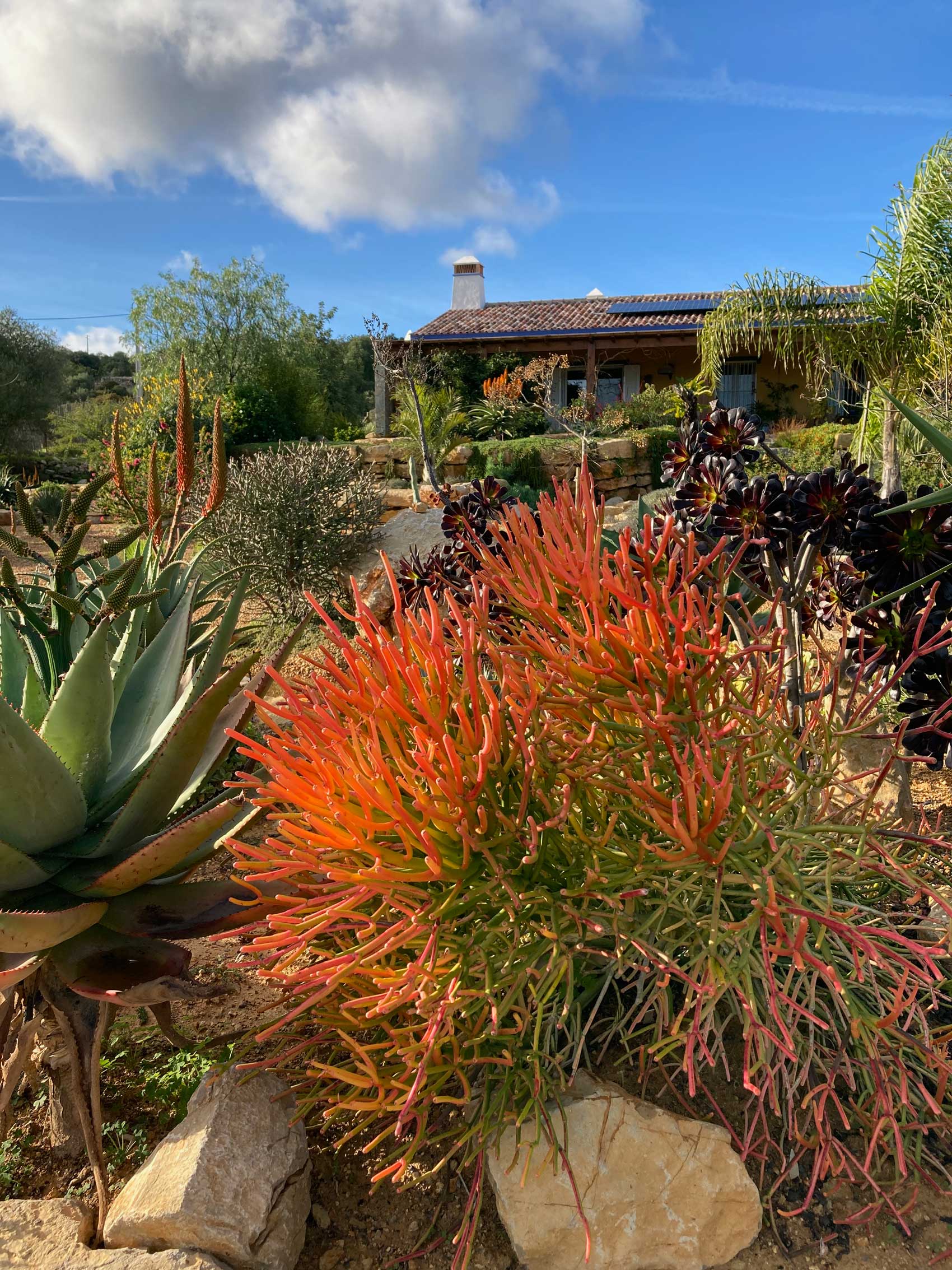
Reverse the gardening calendar
In northern climates, we sit down with a cup of coffee and plant catalogues just after the winter holidays, to prepare for planting in spring.
In our climate, the garden season begins in the autumn. Plant any time after the first rains begin, until as late as January. This gives plants a chance to put down roots and be ready for the heat of the mediterranean summer.
This also means you will rest from garden tasks during the hottest time of the year. Mediterranean plants don’t want to be watered when dormant, which means an irrigation system is a recipe for disaster, rather than a convenience.
The right plants thrive in the mediterranean summer
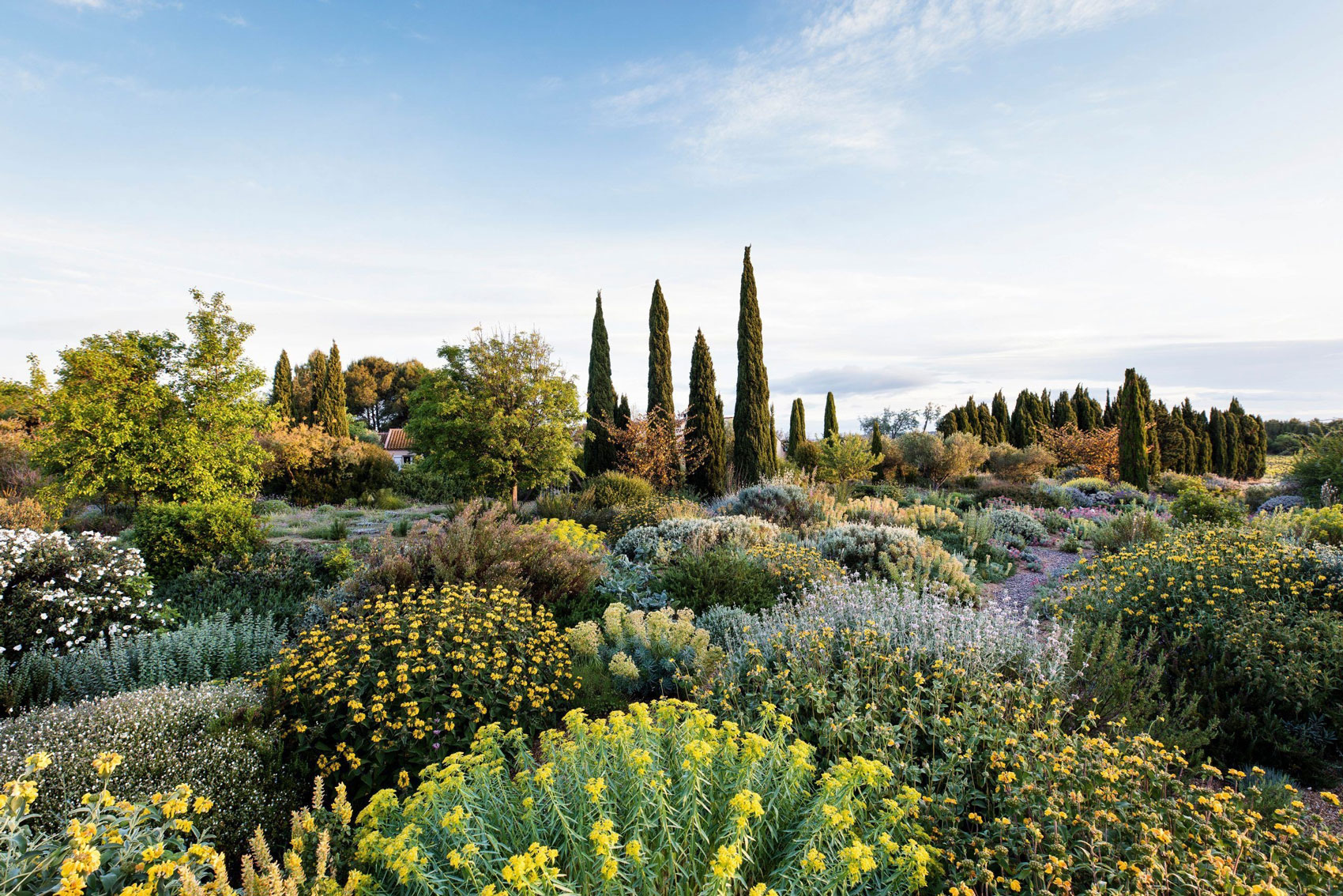
Untended, overgrown plantings around abandoned homes can teach us a lot. If plants are bursting with vitality despite no one watering or tending them, they will make life easier in our own garden. Just be careful to make sure they’re not invasive varieties, like Pampas grass or blue morning glory. Invasoras.pt is a great resource.
It’s all about the roots
When buying plants, we tend to be enchanted by the foliage and flowers bursting forth at the top. But in this environment, we really should be buying roots. Don’t feel guilty about tipping the plant upside down to check if it’s root-bound. The ideal plant is one grown in a long, slender pot, allowing for a healthy, unencumbered root system.
In the mediterranean garden, plants develop two root systems: shallow, surface ones and a second taproot system that plunges deep into the ground to survive during times of heat and drought in our mediterranean summer.
Buy smaller plants
To establish the best root system, buy smaller plants that will establish a deep root system. Bigger plants are tempting—and they cost more! But they are less likely to do well, as they are already reliant on their stronger, surface root system.
At first you will doubt this advice, as it will seem the plant is not growing at all. But it’s putting down roots, and it will soon surpass a larger plant that will struggle to get a foothold. I love the saying: first year sleep, second year creep, third year leap!
No bare ground
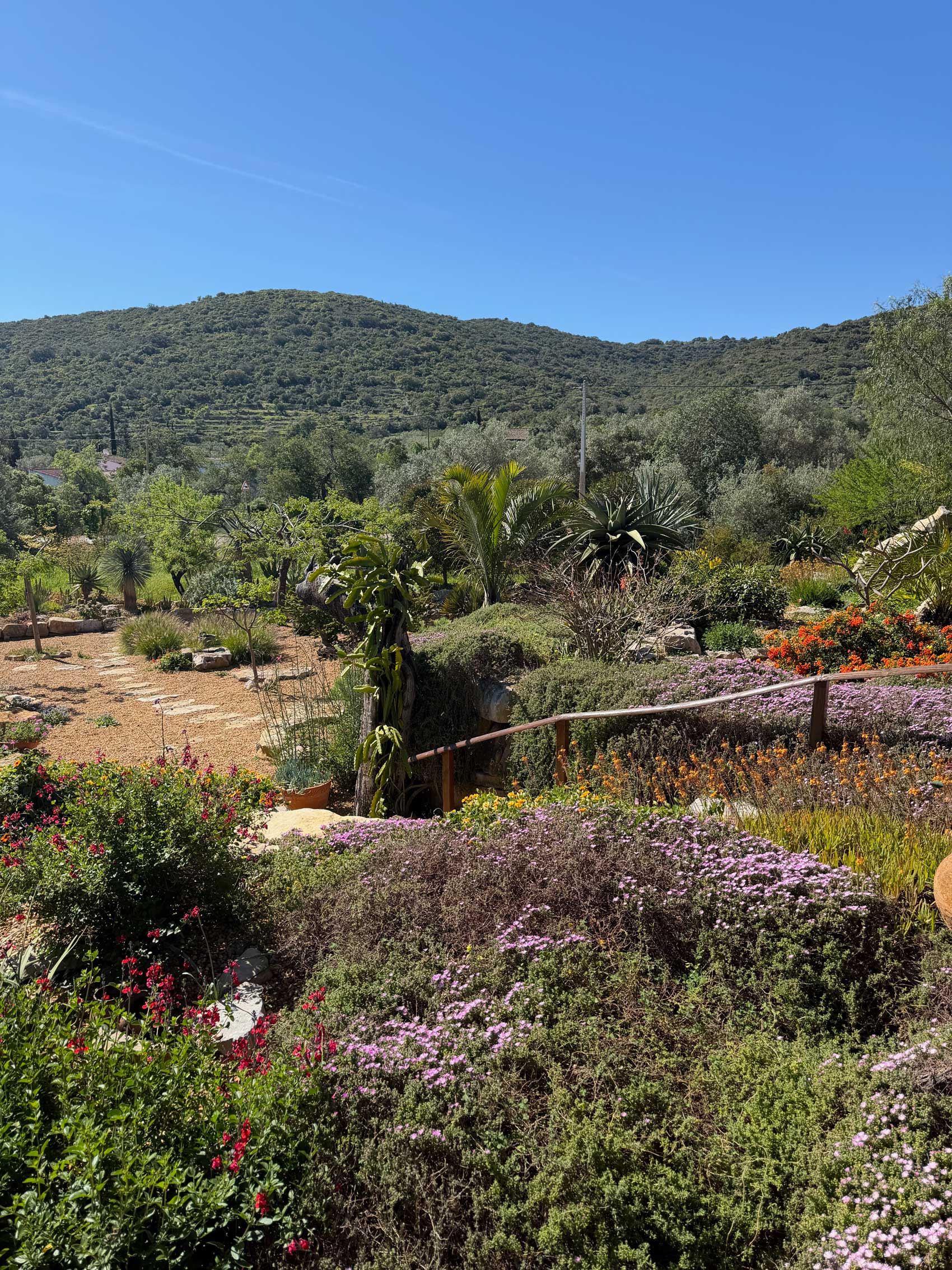
Help your plants thrive, and suppress weed growth by mulching. In the mediterranean garden, the ideal mulch is inorganic, think pebbles and stones. These are more expensive but won’t need to be replaced. Plants retain moisture better when mulched.
Go forth and multiply!
Succulents, the optimal type of plant for our mediterranean gardens, are easily made into new plants from cuttings. The secret? Give the cutting a while to “callous,” by putting it aside for a few days to a week before putting it in a pot or the ground.
Half of my garden are cast-offs and cuttings from friends! Mature gardens need to be pruned, and people are happy to give them to a friend instead of dumping in the garden waste. And before you know it, you will be the one doing the pruning and giving!
The Mediterranean Gardening Association Portugal (MGAP) will have a plant swap this fall, and also offers classes, tours and hands-on sessions.
Check out our events at our event page!
Additional photos courtesy of Rosie Peddle and Olivier Filippi.
Posted by Justine Strand de Oliveira
June 2026