Orchids and wildflower meadows in the Algarve
Conservation should start at home, but does that mean your home?

The recent improved levels of winter rainfall have produced an amazing response from the plants and trees, but also the wildflower meadows around us here in the southwest of Europe. To see what is in flower today, navigate to the website of the Sociedade Portuguese de Botanica, for a searchable database on native plants by location.
Some of those who have decided to buy homes in the Barrocal countryside have taken the opportunity to increase their gardens by buying neighbouring plots. This is a very practical way to safeguard privacy, but also gives opportunities for practicing conservation at home. Even if you have a smaller garden, the principles still apply.
Although some reservoirs are still less than half full and we are facing water restrictions, the more natural-style garden will not suffer. Indeed, welcoming nature into your garden will save you money and effort since it requires minimum intervention, but it will also produce more interest and diversity.
The poor soils, sometime made thinner by erosion on slopes, provide ideal habitats for spectacular spring displays of annual wildflowers and, if you are lucky, will include amazing varieties of ground orchids. In common with many other mediterranean plants, they thrive in low fertility soils. See the MGAP Bookshop for guidebooks in English on the wild orchids and wildflowers of the Algarve.
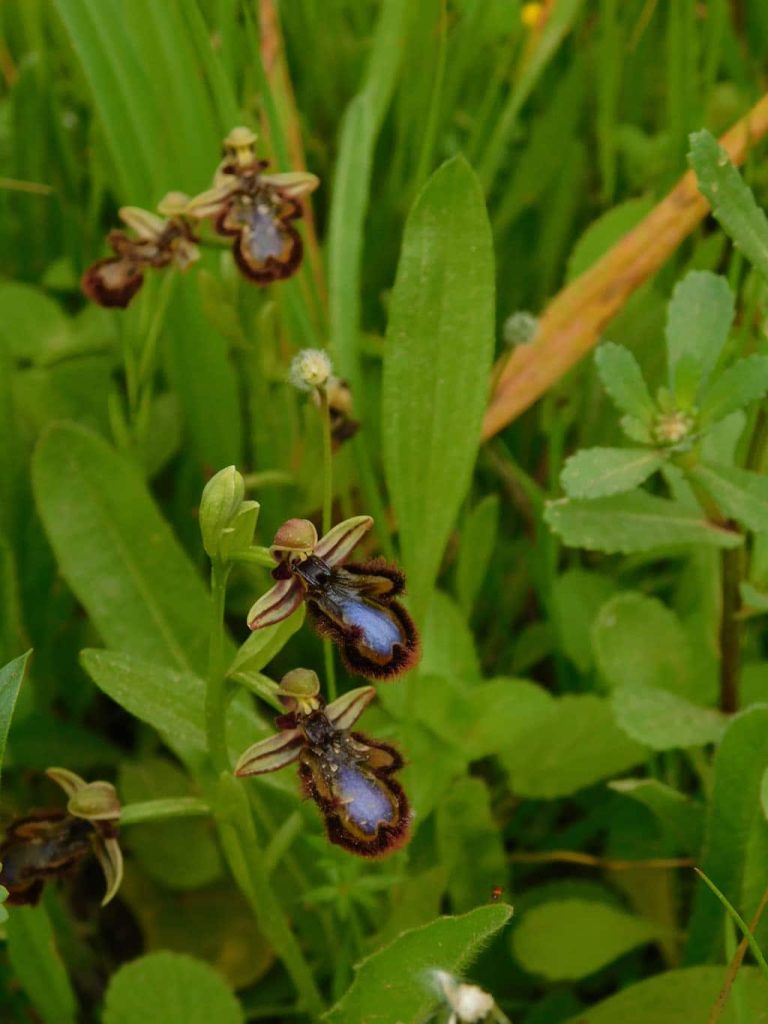
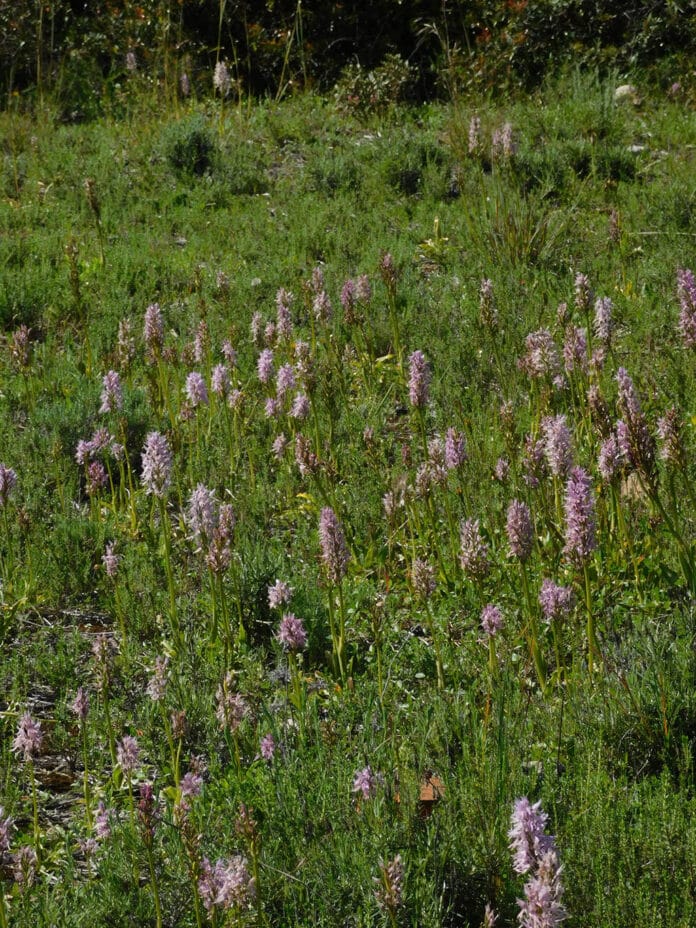
A big advantage is the lack of competition from grasses and more aggressive colonisers, such as the yellow Bermuda buttercup (Oxalis pes-caprae). These special habitats will not survive deep ploughing, brutal and inappropriate cleaning for fire prevention, or intensive agriculture.
Fertilising and attempting soil improvements will be equally effective in denying us the special pleasure of this natural seasonal spectacle.
Many wildflowers happily cohabit with traditional agriculture such as that found in the Dry Orchards (Pomar de Sequeiro) of the Barrocal region. For a digital version of the new book on traditional dry orchards of the Algarve, see here.
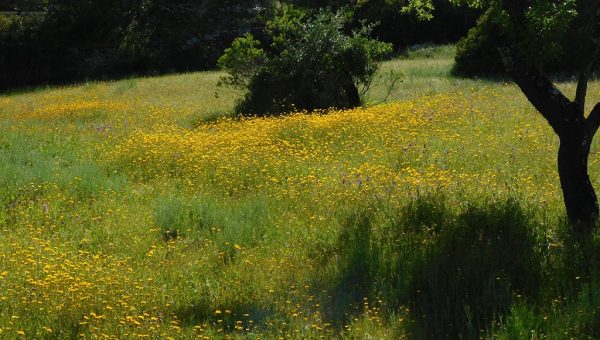
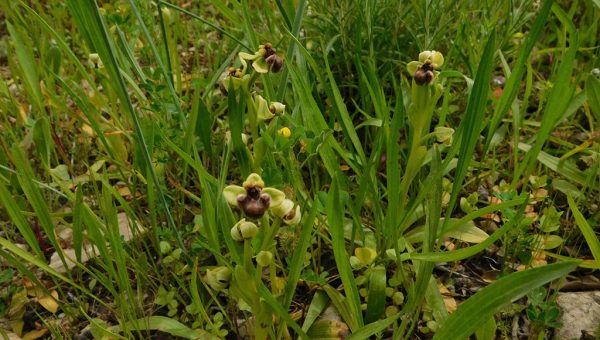
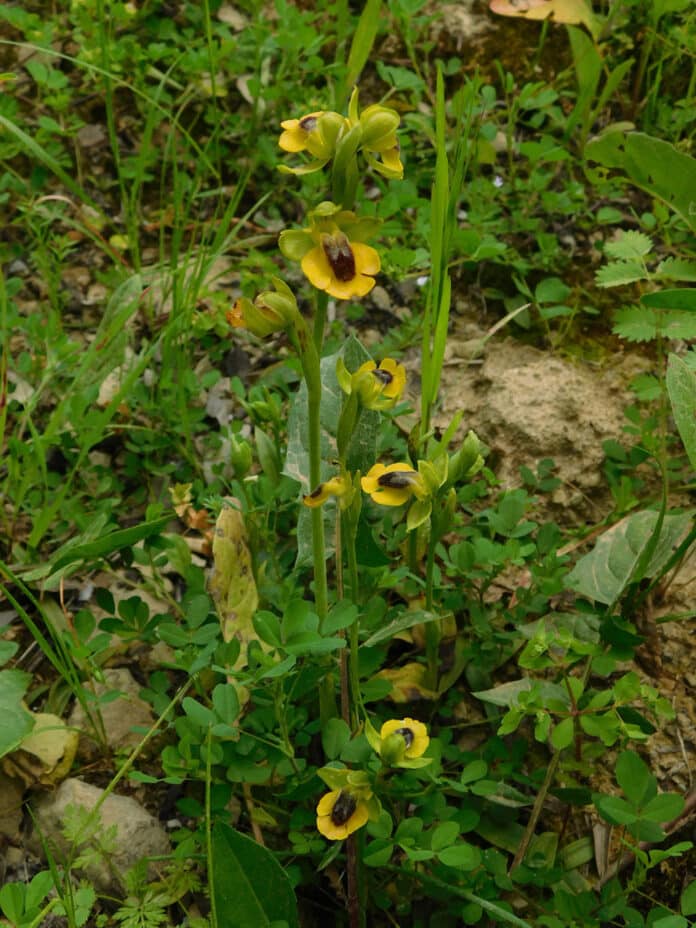
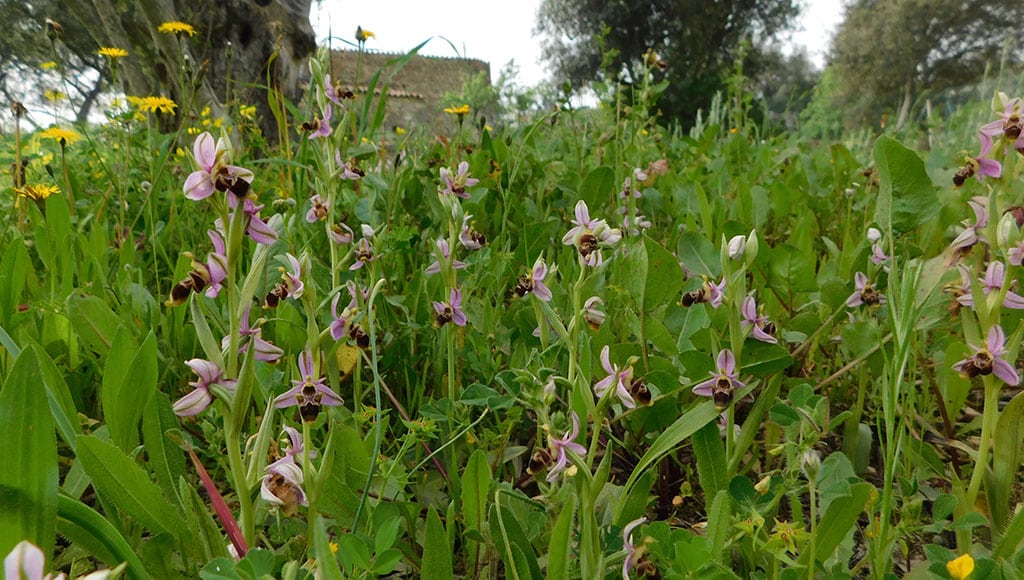
Not everyone can afford the luxury of leaving land economically inactive, but when all the areas used and managed as ‘gardens’ are added together, it is an important and significant contribution to the natural landscape. In this way, you can provide a haven for insects and wildlife and for a special range of native flowers.
Biodiversity is now a commonly used concept and if you wish to see it in your own garden, use a gentler approach to encourage the spring displays. Leave the plants until they have set and scattered their seed; a mid-to-late summer cut of meadows once each year will build up a latent seed bank in the soil.
Posted by Rosie Peddle
April 2024